

Effects of Missing Teeth
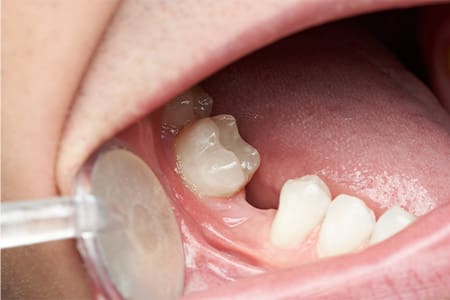
To get a feel for your denture candidacy, consider the effects of missing teeth first. You’ll then see how restorations could (or would) benefit your smile.
Note that tooth loss can stem from a great many factors. For instance, someone could lose a few teeth due to cavities and infected tooth pulp. Another person might have a tooth fall out from gum disease, which can loosen one’s pearly whites. A few could even suffer knocked-out teeth due to injuries or accidents.
In contrast, the effects of tooth loss are fairly stable and consistent. The most obvious one is likely that missing teeth make eating, speaking, and smiling very difficult. Smile gaps can also make remaining teeth tilt, cause jaw erosion, and serve as breeding grounds for harmful bacteria. Untreated tooth loss is thus a serious problem that deserves your immediate attention.
What Qualifies You for Dentures?
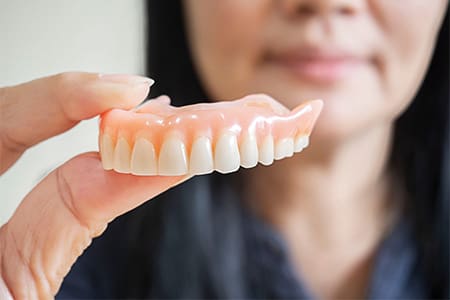
It doesn’t take much to qualify for modern dentures; almost any adult with missing teeth can get them. Still, there are three points about candidacy you should know.
The first is that dentures depend on good oral health. These prosthetics don’t decay like natural teeth, but they do require strong gum and jaw tissues for stability. Weak gums and jawbones lack the strength necessary to keep dentures in place. (Sensitive or decayed teeth aren’t disqualifiers, though; dentures can replace them.)
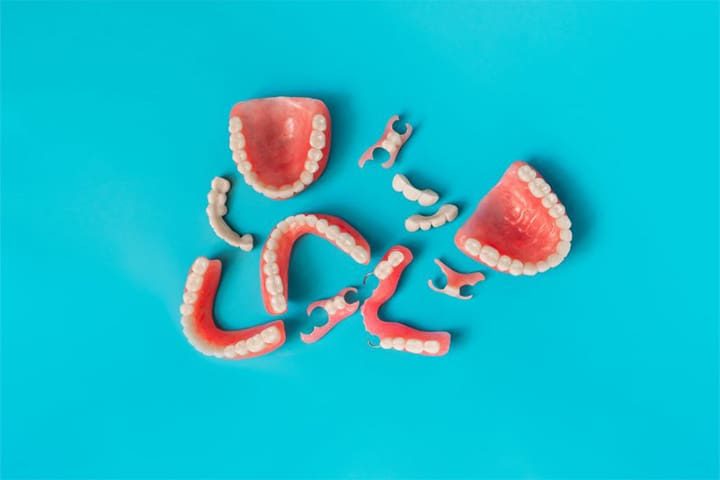
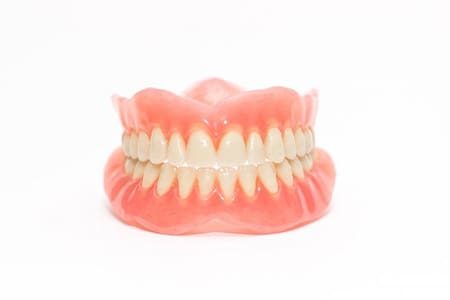
Secondly, how many teeth you’ve lost impacts which dentures you need. Those who only lack a few will most benefit from a partial model, for example. Others who lack a whole arch will require a full denture instead.
Last but not least, finances play a key role in the overall treatment. Dentures cost much less than dental bridges or dental implants, but they work well regardless. They’re thus well-suited for patients with limited budgets.
Alternative Tooth-Replacement Options
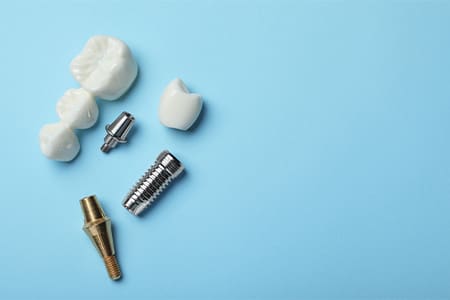
If you don’t qualify for dentures, there’s no need to worry much. Melrose Dental Group offers other tooth replacement options to choose from. In particular, these are:
- Dental Bridges – Unlike dentures, a dental bridge is a fixed restoration that consists of two crowns fused to an artificial tooth. A dentist must alter your nearby teeth to place the device, which can replace up to four adjacent teeth at once.
- Dental Implants – Dental implants are small titanium posts placed in your jaw’s empty sockets. Once correctly set, they fuse with your jawbone and act as highly secure prosthetic teeth.

Psychological Benefits

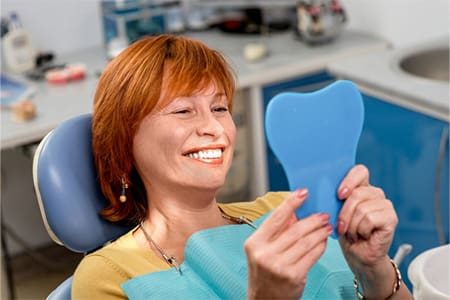
After years of dissatisfaction with your appearance, dentures can provide psychological benefits that help you feel happy and excited about your new smile. With full and partial dentures, you’ll no longer feel self-conscious about the way you look; instead, you will embrace every opportunity to show off your beautiful teeth.
Clear Enunciation

Slurred words and unclear speech will be a thing of the past when you choose dentures to replace your missing teeth. Once your new prosthetics are in place and your mouth has adjusted, you will be free to talk to your grandchildren, colleagues, friends, and family with confidence.
Improves Nutrition

Tooth loss makes it challenging to eat healthy, nutrient-dense foods. However, with dentures, you can enjoy your favorite meals again. Many patients use denture adhesive for added security so that when you bite down into a tasty burger or take a bite of a delicious salad, your teeth don’t slip but remain stable instead.
Preserves Oral Health

Your smile will thank you when choosing to have a partial denture fill in the gaps along the upper or lower arch of your mouth. When natural teeth remain, they can shift to fill gaps, causing misalignment. With a partial denture, this problem is nullified because of the addition of natural-looking, durable artificial teeth.
Expands Opportunity

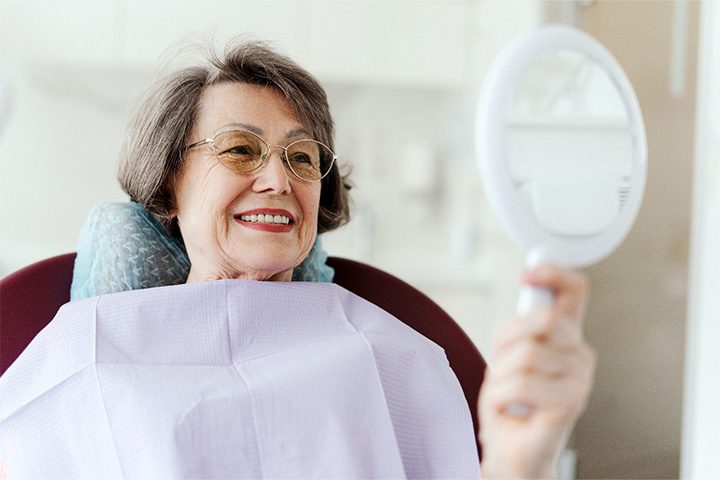
Full and partial dentures transform your appearance, boost your mental and emotional well-being, and generate greater confidence in the way you look. They also expand your personal and professional opportunities. Whether it’s a job interview or a first date, you’ll undoubtedly make a good first impression thanks to your new and improved smile.
Factors That Affect the Cost of Dentures
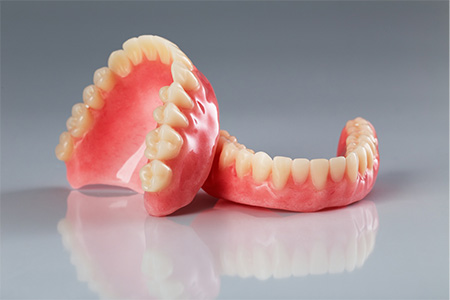
In order to create a trustworthy estimate of the cost of your dentures, we’ll need to answer the following questions:
- How many teeth have you lost? Are there only a few gaps that can be filled with a partial denture, or will you need to pay for a full denture to replace an entire arch?
- Are any preparatory treatments needed? Will you need to make room in your budget for a tooth extraction or other services before you can receive dentures?
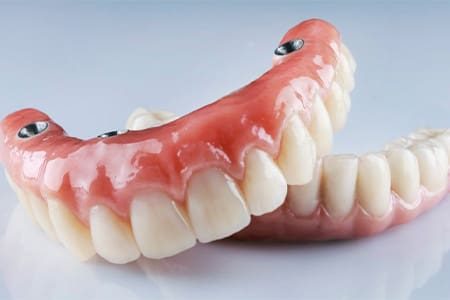
- What kind of denture will you get? Do you want a traditional denture, or are you interested in getting sturdy, long-lasting implant dentures?
Additionally, the materials used to make your dentures will have an impact on the amount you pay. Bear in mind that cheaper materials often result in a prosthesis that isn’t as durable; in the long term, it’s often worth paying the cost for higher-quality materials.
Are Implant Dentures More Expensive?
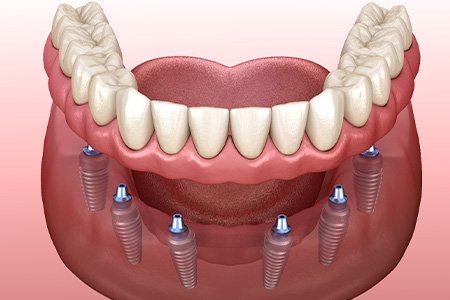
The short answer is yes; implant dentures do tend to have a higher initial cost than traditional dentures. However, this is balanced out by the fact that implant dentures offer all kinds of unique benefits that you simply wouldn’t get from traditional dentures, such as actively preventing bone loss in your jaw. Furthermore, implant dentures can potentially last for decades with the right care; as a result, you’re less likely to need to pay to have them replaced.
Other Options for Making Dentures Affordable

If you don’t have dental insurance, you may be worried about your ability to pay for dentures. Rest assured, however, that our team is happy to take whatever steps we can to make sure that you’re able to get the high-quality care that your smile deserves without putting too much strain on your bank account.
For example, our practice has a membership plan that offers discounts on certain services as well as $50 credit that can be used for treatment. On top of that, we can provide flexible financing through Lending Point and CareCredit; this lets you break up the cost of dentures into smaller installments. If you’re interested in learning more about these payment options, feel free to speak to our team for more information.

Removable Dentures
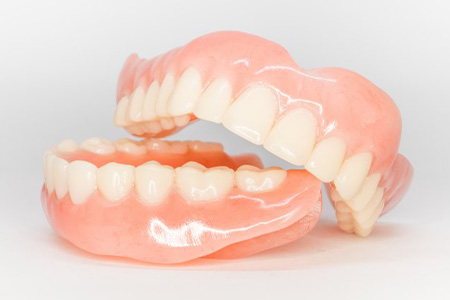
Full and partial dentures are considered removable prosthetics that allow you to enjoy greater smile flexibility. However, removing your teeth requires you to clean them regularly and thoroughly to maintain their appearance and longevity.
Remove After Eating

Food debris, bacteria, and other particles can accumulate on your dentures while you eat. This is why you are encouraged to rinse them afterward to prevent harmful buildup from transferring from your dentures to your gums and natural teeth. Do not use hot water, as it can warp the materials. Instead, rinse with lukewarm water before putting them back in your mouth.
Clean Your Restoration
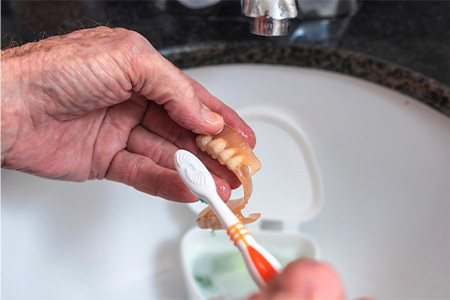
You will need a soft-bristle toothbrush or a specialized denture brush, nonabrasive toothpaste, and lukewarm water to clean your dentures. This should be done every morning and evening, and after meals (if possible). By caring for your dentures this way, they will remain healthy and pristine over the long term.
Keep Your Dentures Safe
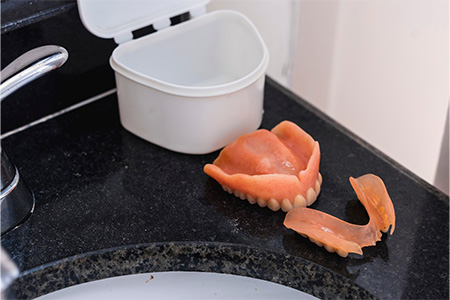
Dentures should remain out of reach so that children and pets cannot get hold of them. It is too easy for little hands and furry friends to accidentally damage them or treat them as playthings or chew toys. Keep them in a protective case on your bathroom counter or shelf. This will ensure they remain in place and avoid damage.
Remove Dentures When You Sleep
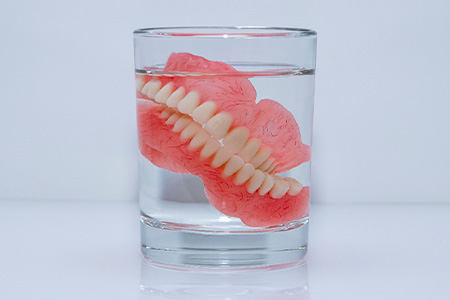
Sleeping in your dentures is not recommended for many reasons. In addition to allowing them time to soak overnight and undergo a more thorough cleaning, this also gives your gums and bones a chance to rest. After supporting your artificial teeth throughout the day, they lose valuable nutrients over time. At night, they can receive a much-needed break. Also, nighttime removal slows the progression of bone resorption, a normal process that occurs when wearing dentures.
Notice Changes
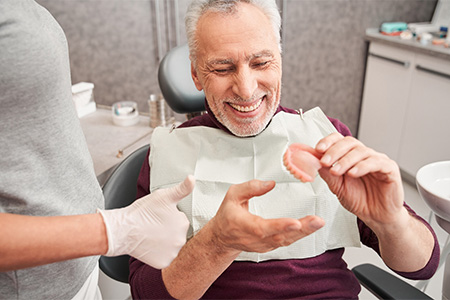
Wearing dentures includes seeing your dentist for relines and replacements over time. The reason is that your facial shape will change as the underlying bone experiences resorption. This can cause your teeth to no longer fit properly or comfortably. If you notice this change, schedule an appointment with our Melrose Dental Group team right away.
All-On-4 Dentures
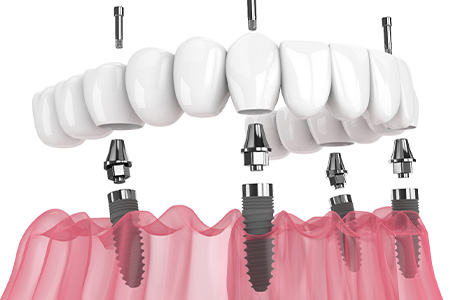
All-On-4 dentures are anchored to your jawbone, which makes them impossible to remove by anyone other than your dentist in Melrose. Fortunately, maintaining them is as easy as caring for your natural teeth. Brushing twice daily for two minutes, flossing, and rinsing with an ADA-approved mouthwash are all that is required, in addition to regular dental checkups and cleanings with our talented team.